
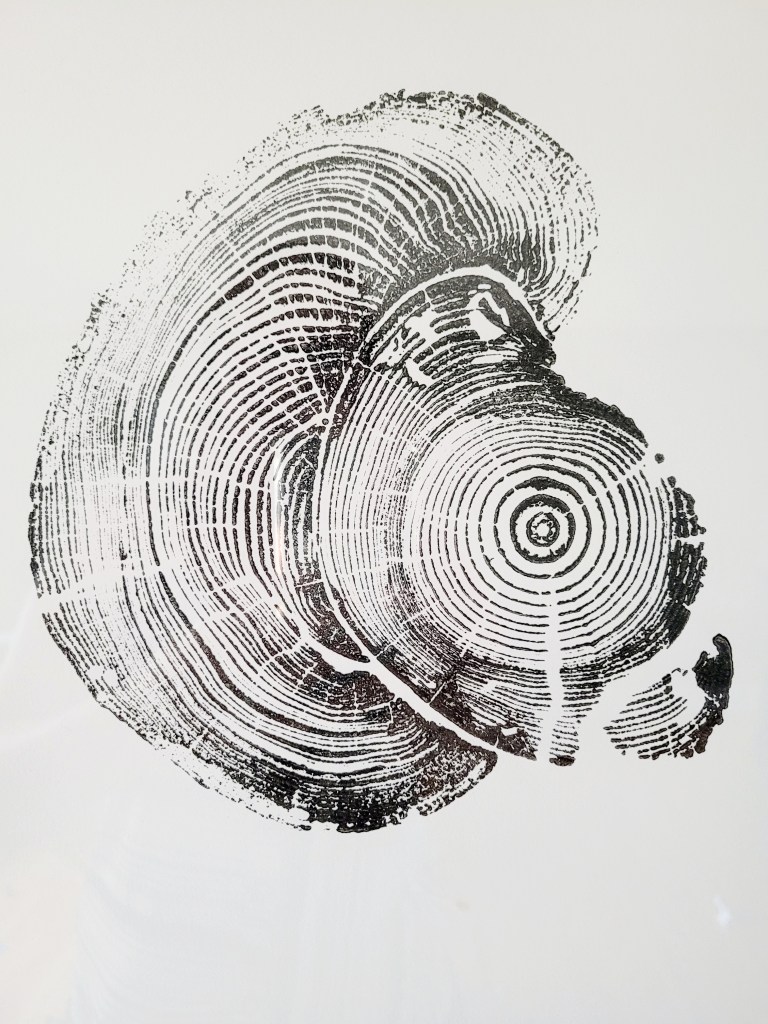
Hanging above my kitchen table are trees…or what used to be trees. They are prints of trees from US national forests made with ink on heavy parchment. I often find myself staring at these prints (a sign that my money was well spent on art). They are fascinating. The rings expand and contract, wind around each other, split and reconnect. Each ring is a reflection of the life that this tree lived. Were the wider rings grown during a warmer time with lots of rainfall? Were the narrower rings formed during a drought or a cold year? What made this tree branch and curl?
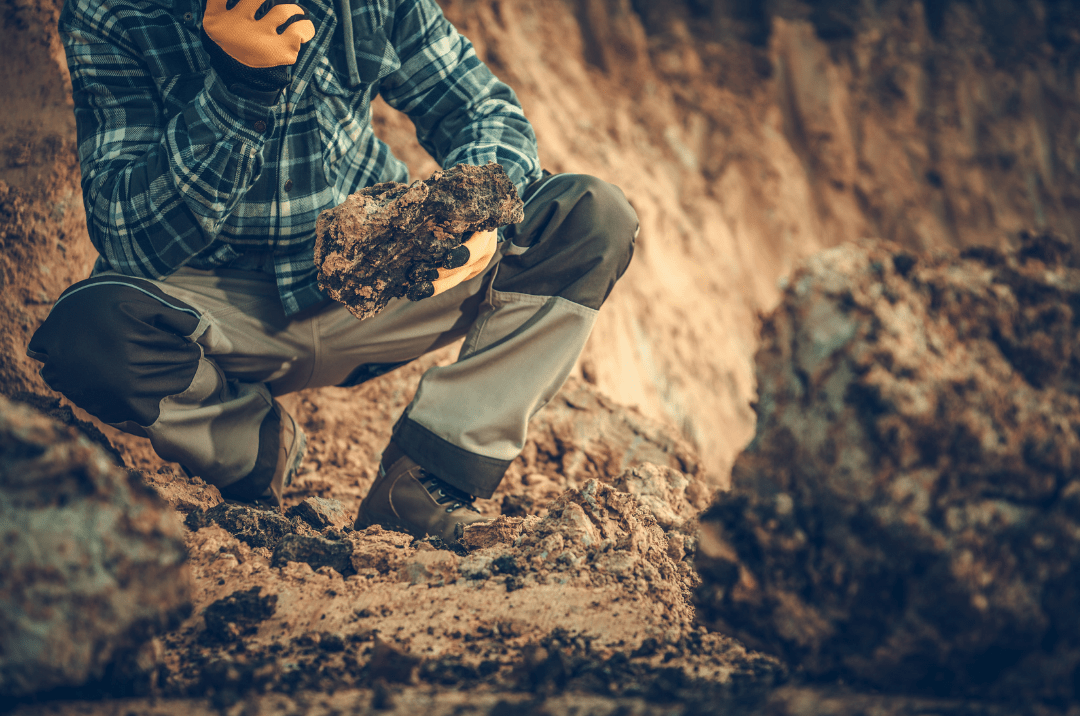
These tree rings and the questions they evoke remind me how similar a young tree and an old rock can be. Looking at a natural wall of rock (called an outcrop), it is fun to stop and think about what these rocks have seen. Were they brought here by floods, storms, or waves? Was it an ancient volcano? What small little creatures burrowed in its mud before it turned to stone? Did dinosaurs walk on this layer? Did the Earth have life or breathable air when this rock came to be? What tremendous forces cracked this rock and reshaped it into its current state?
Trees and rocks both give us clues to our past. They formed slowly, adapted to a changing climate and seasonal conditions, were interrupted and modified by the world around them. They are clues to unlock our planet’s history. To think like a geoscientist we need only to look at the world around us and ask – how did this come to be?
Is there something you are wondering about? Comment below!
 Energy Rocks