

You’ve probably heard recent calls by investors, university groups, or climate change experts to stop using oil and gas immediately. Government promises are plentiful; move to exclusively electric vehicles by 2030; be carbon neutral by 2050. You may have even heard opposite arguments, saying that the world needs oil and can’t get away from it.
It seems we are in an energy tug-of-war. How do you pick a side? Do you even need to? What is realistic?
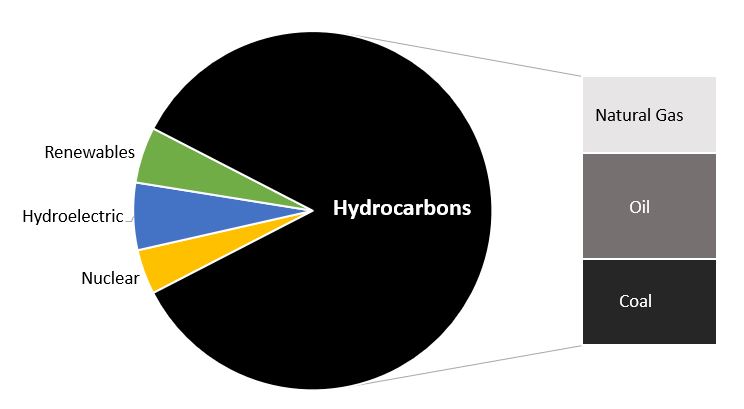
Let’s start with the current energy mix. Right now (based on 2019 consumption) 84% of the world’s energy comes from fossil fuels. That includes almost 30% coal. Nuclear, hydroelectric and renewables make up the remaining, with renewables (including biomass, solar, geothermal, wind, to name a few) providing about 5% of consumed energy. The renewables slice is not very big, and it is not evenly distributed throughout the world.
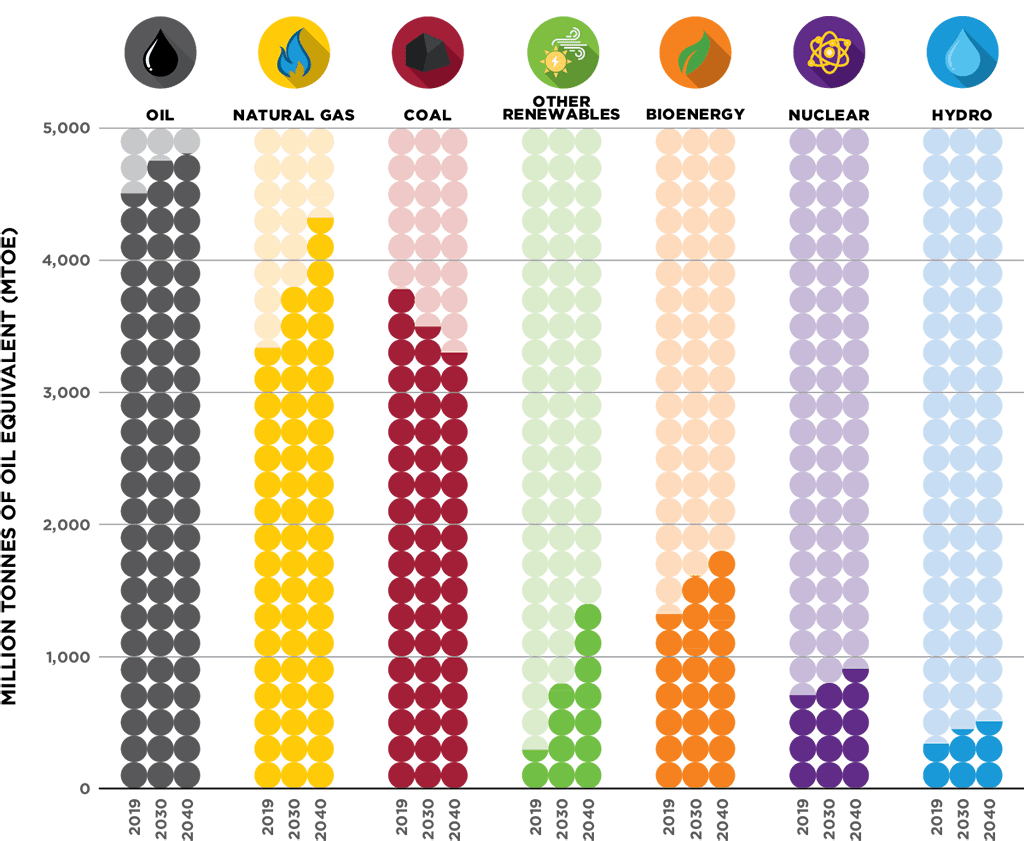
If you think that is surprising, consider that oil and natural gas production is projected to increase over the next 20 years. The pace of renewables & oil and gas alternatives is also projected to increase rapidly.
Can we simply cut off 84% of the world’s energy supply overnight? Is it oil or nothing?
A growing chorus of voices is calling for a smooth and strategic energy transition. In this approach, a planned, measured approach is used to integrate more renewable and alternative sources into the current energy mix.
Why a smooth transition is a good idea:
Energy poverty
- “Turning off the taps” would be devastating to countries that rely on these resources. Many countries don’t have access to the economic and physical resources required to transition to a new energy source. This would likely create a humanitarian crisis.
Stress on earth systems and resources
- Shifting immediately to new sources of energy creates new problems. According to an analysis by ENERGYminute, if we all switched to EV cars tomorrow, the world would require lithium production to increase by over 2500%, which would deplete the world’s reserves in 14 short years. Similarly, Cobalt would be depleted in three years. Yikes.
- Increased mining also places stress on the environment, and would also face social hurdles (heard of NIMBY?). It also takes significant time to propose, plan, and develop a new mine. According to the University of Arizona, it can take 4-12 years to develop a copper mine and between 1 million and 1 billion to plan and build an operation. That doesn’t include the actual mining and closure, which also take time and money.
Time for innovation
- Not all renewable technologies are sustainable. Wind, solar, and batteries, all require materials from mining. A gradual transition allows time for innovation and new technology. It only took 66 years from the first successful airplane flight to land on the moon. It’s safe to say that a lot can happen and will happen in the next decade.
Economic stability
- Shutting down an industry is economically devastating. In Canada, oil and gas-related activities contribute to just under 10% of the country’s GDP and make up nearly 25% of some provinces’ economies. Removing that, without replacing it with something else would cost jobs, require infrastructure clean-up (here’s an example), and more at great expense.
Can the energy transition happen overnight? No. Do we need an energy transition? Yes.
It’s easy to dismiss emissions because we don’t see them, but geoscientists and engineers have a duty to the public, and a part of that duty is to clean up after ourselves. If you stopped cleaning up your home, it would get pretty gross (…surprisingly quickly).
The energy transition is still taking shape and it is progressing. What is clear at this point in time is that new solutions will need to be sustainable and realistic.
What do you think the future will bring for global energy? Share your thoughts below.
 Energy Rocks